A visit to the Primates
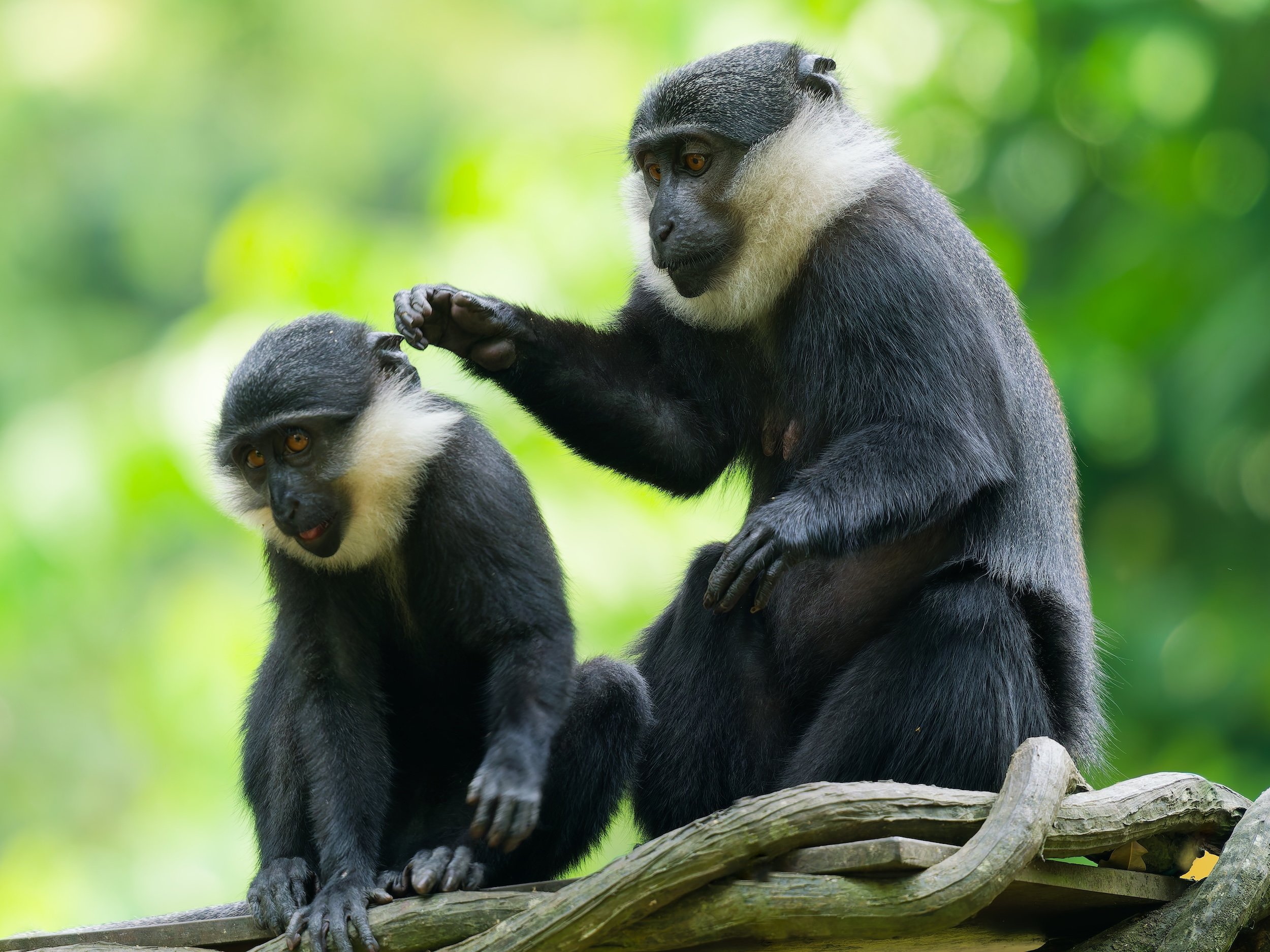
A visit to Singapore Zoo, which is now part of the Mandai Wildlife Reserve, consisting of the Zoo and the following parks: Birdlife, Rivers Wonders, Night Safari, and Rainforest Wild Adventure. You need to buy separate admission tickets for each park and set aside plenty of time, the zoo alone takes a full day—and even that isn’t really enough time. Our focus is mainly on the so-called Primate Zone, and we’re particularly interested in photographing the orangutans. What stands out is that the animals generally have a large area in which to hide or roam freely. The park is fantastically designed for the animals, who live in a simulated environment where they feel at home with plenty of room to move around. There’s a chance you might miss some animals because they’ve retreated to rest or escape the Singaporean heat.
As for taking photos at the zoo, it seems easier than it is, especially when screaming children and parents gather around you. With plenty of time and patience, you’ll manage to get most of your shots, though not always exactly as you’d like; you try as much as possible to mimic the natural environment in which these primates live.
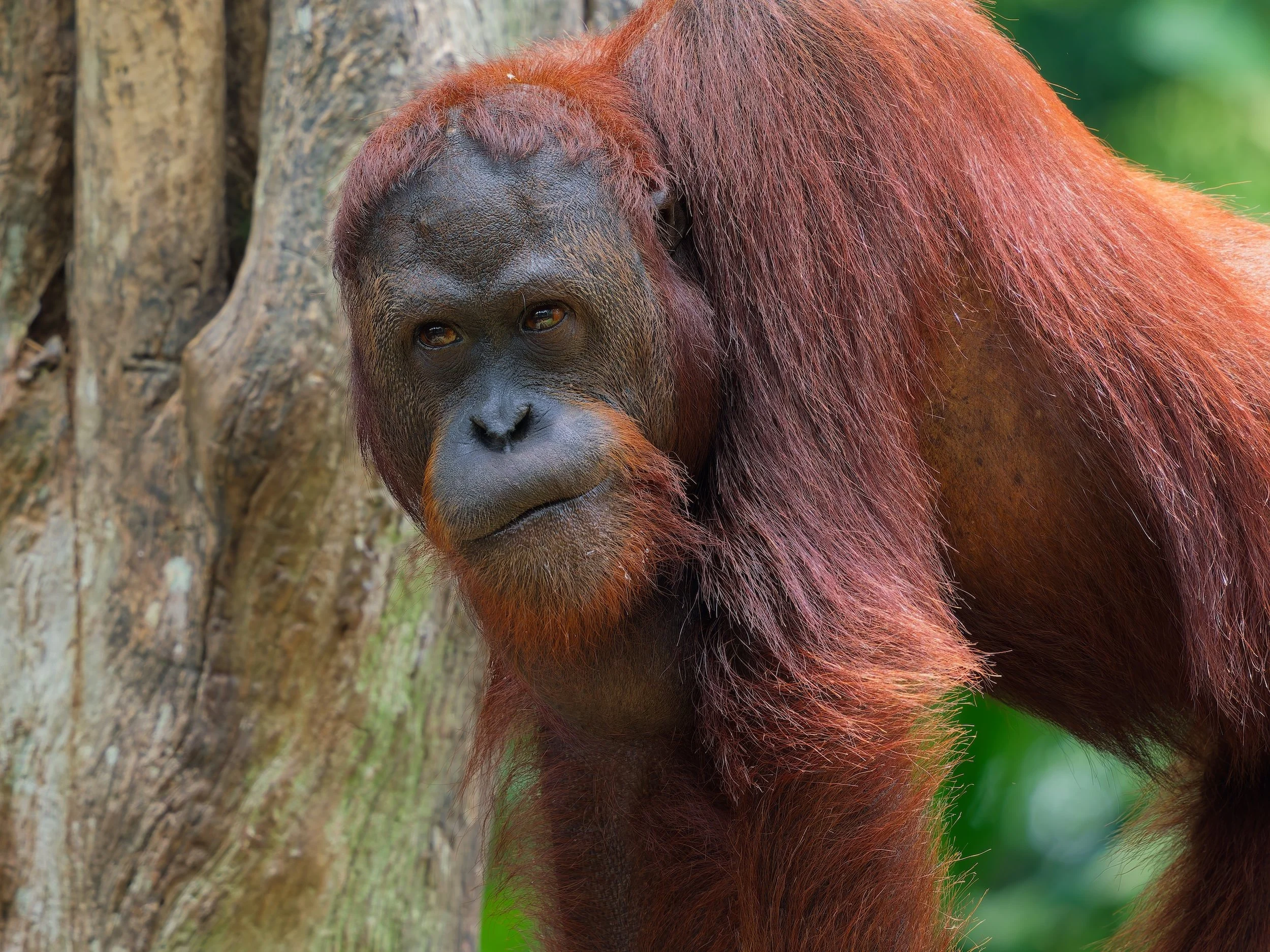
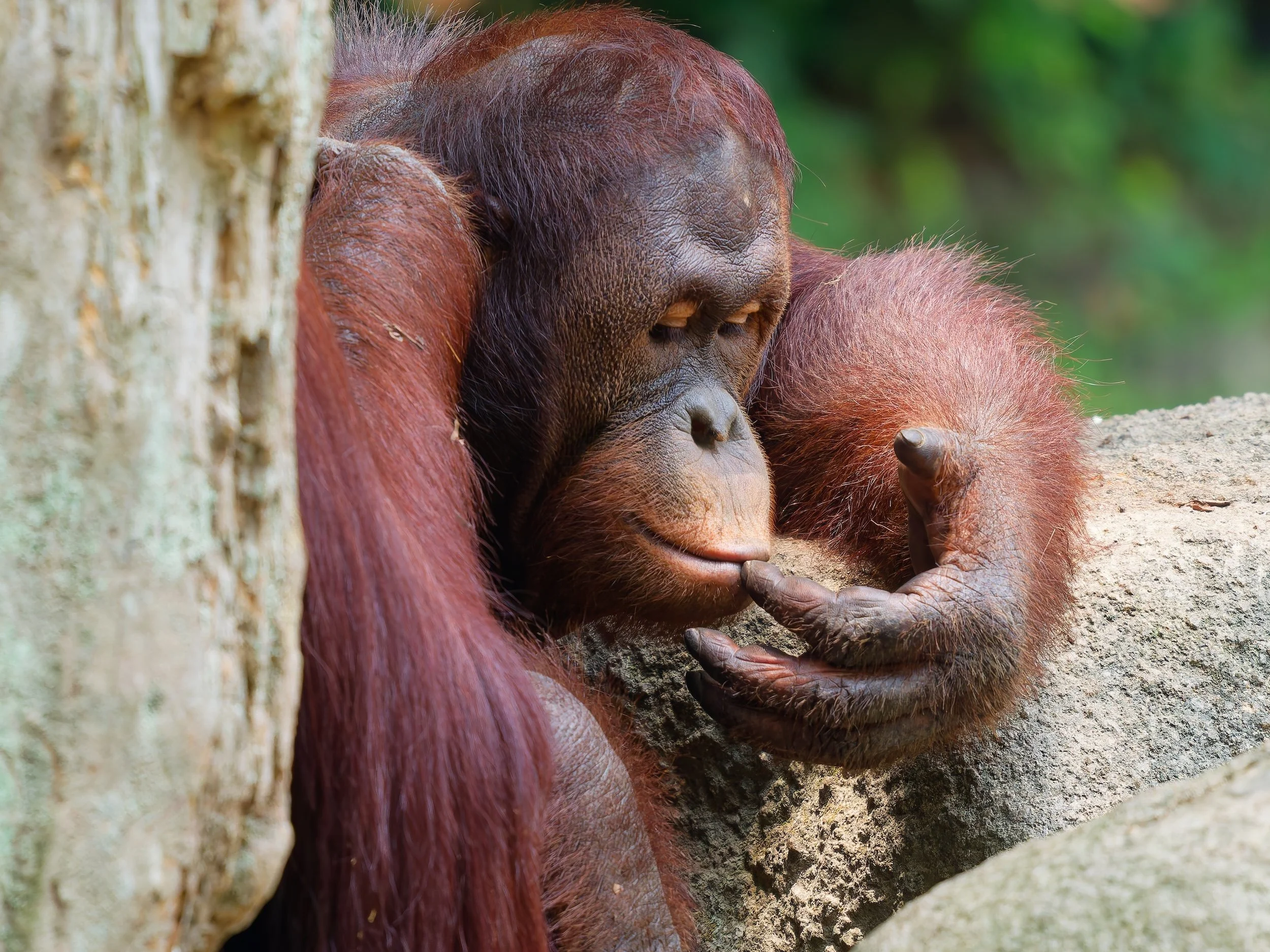
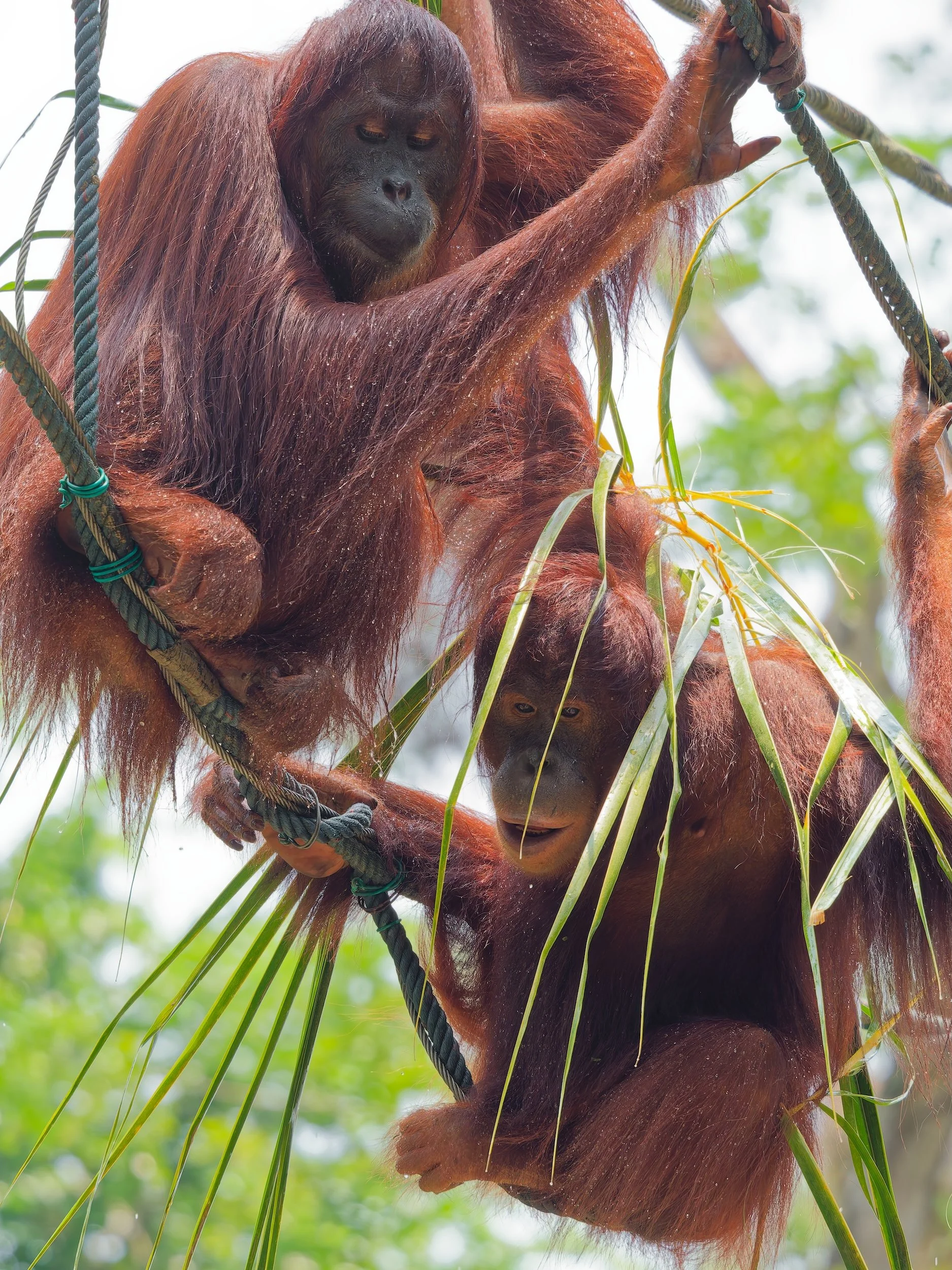
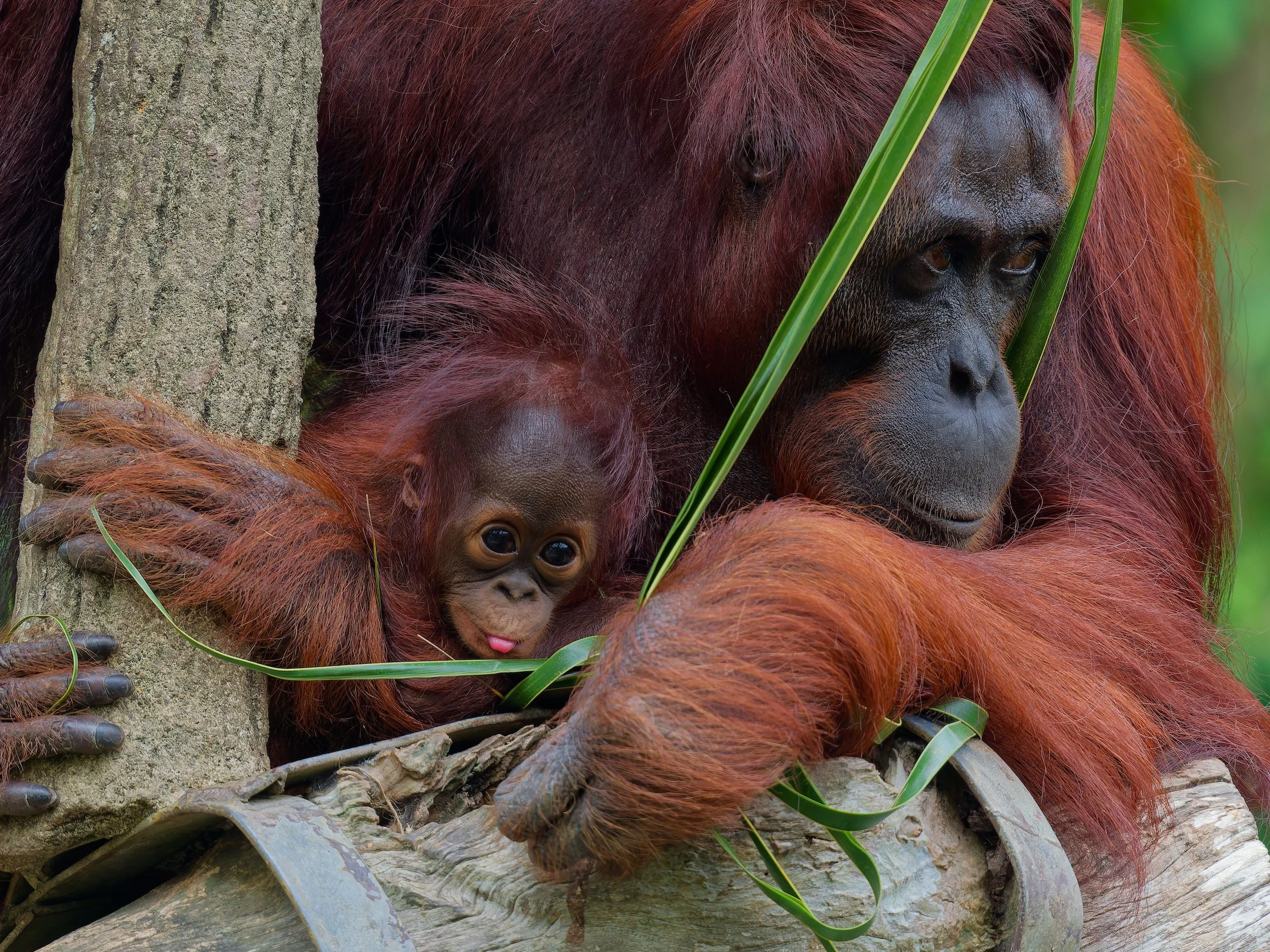
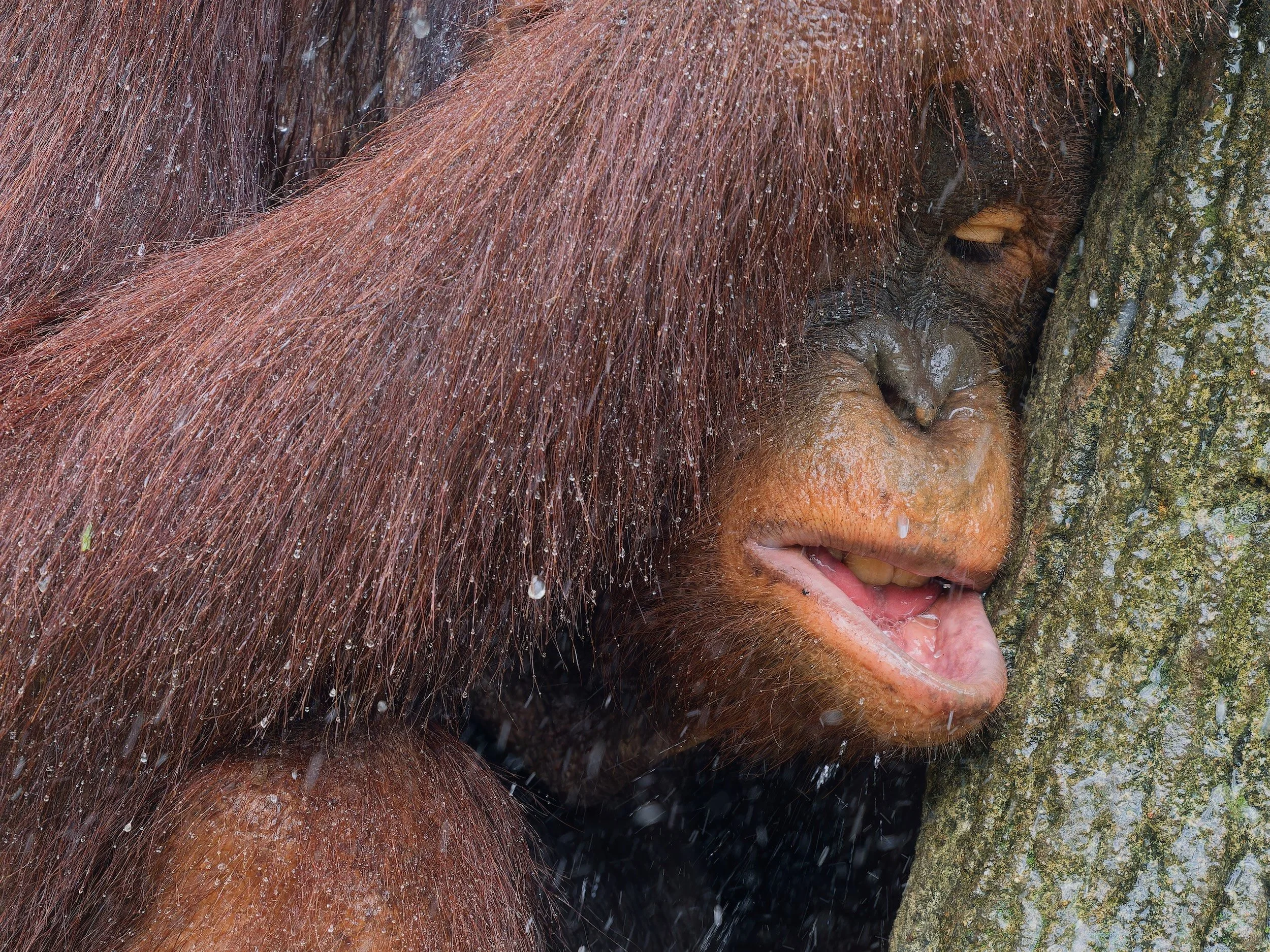
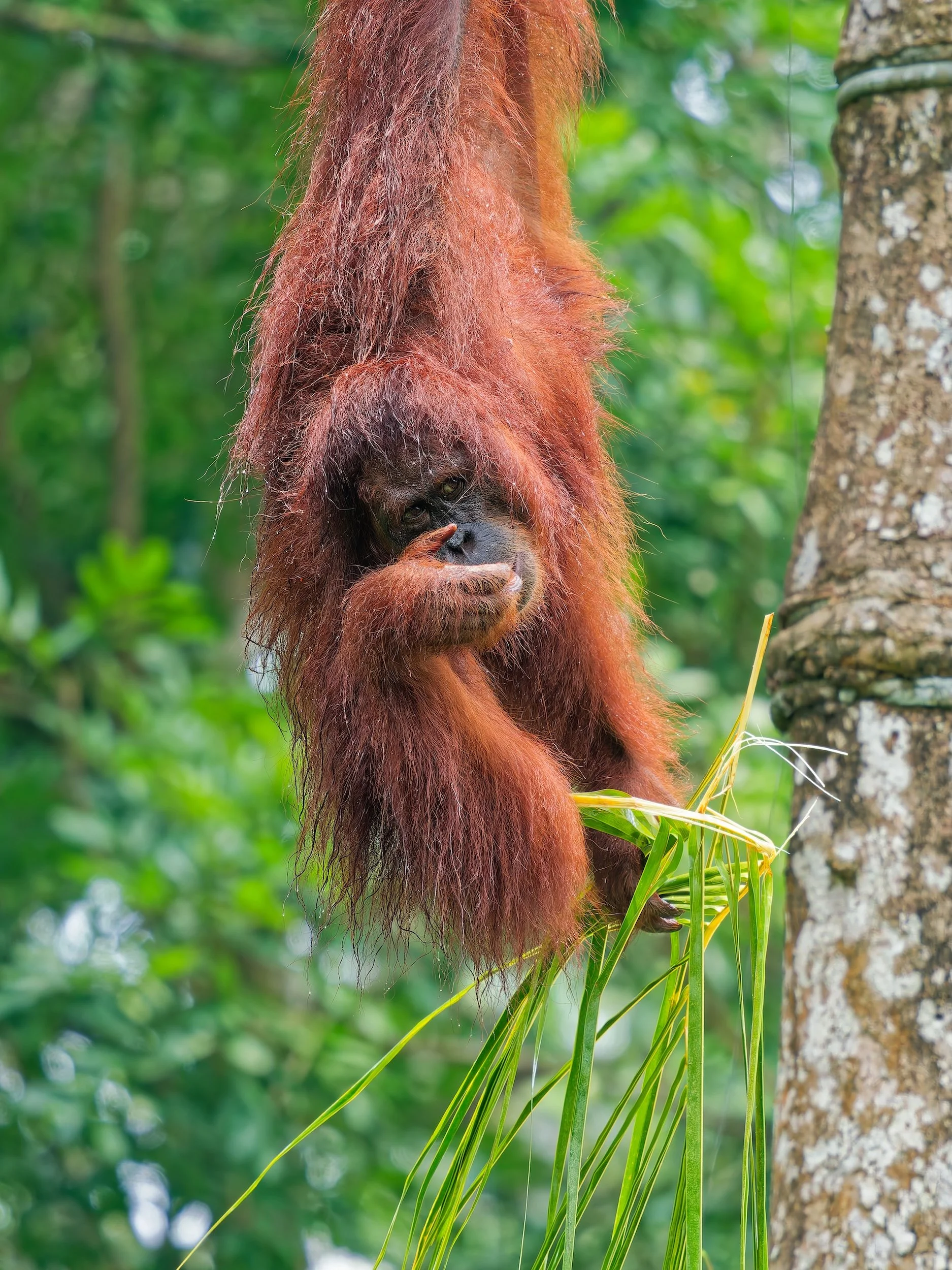
Once we arrived at the island where the orangutans live, they were being kept wet by a simulated artificial rain shower. They were clearly enjoying it, behaving playfully and moving along the paths created among the trees. Meanwhile, I asked one of the rangers present a question: these primates are mainly from Borneo, while two are from Sumatra, the Sumatran ones have a coat color that’s more orange compared to the Bornean variety, which tends toward a browner shade. I’ve visited both places during my travels: one was the Sepilok Orangutan Rehabilitation Center in Sandakan, Sabah, and the other was the former Bohorok Orangutan Rehabilitation Center in Bukit Lawang, Sumatra.
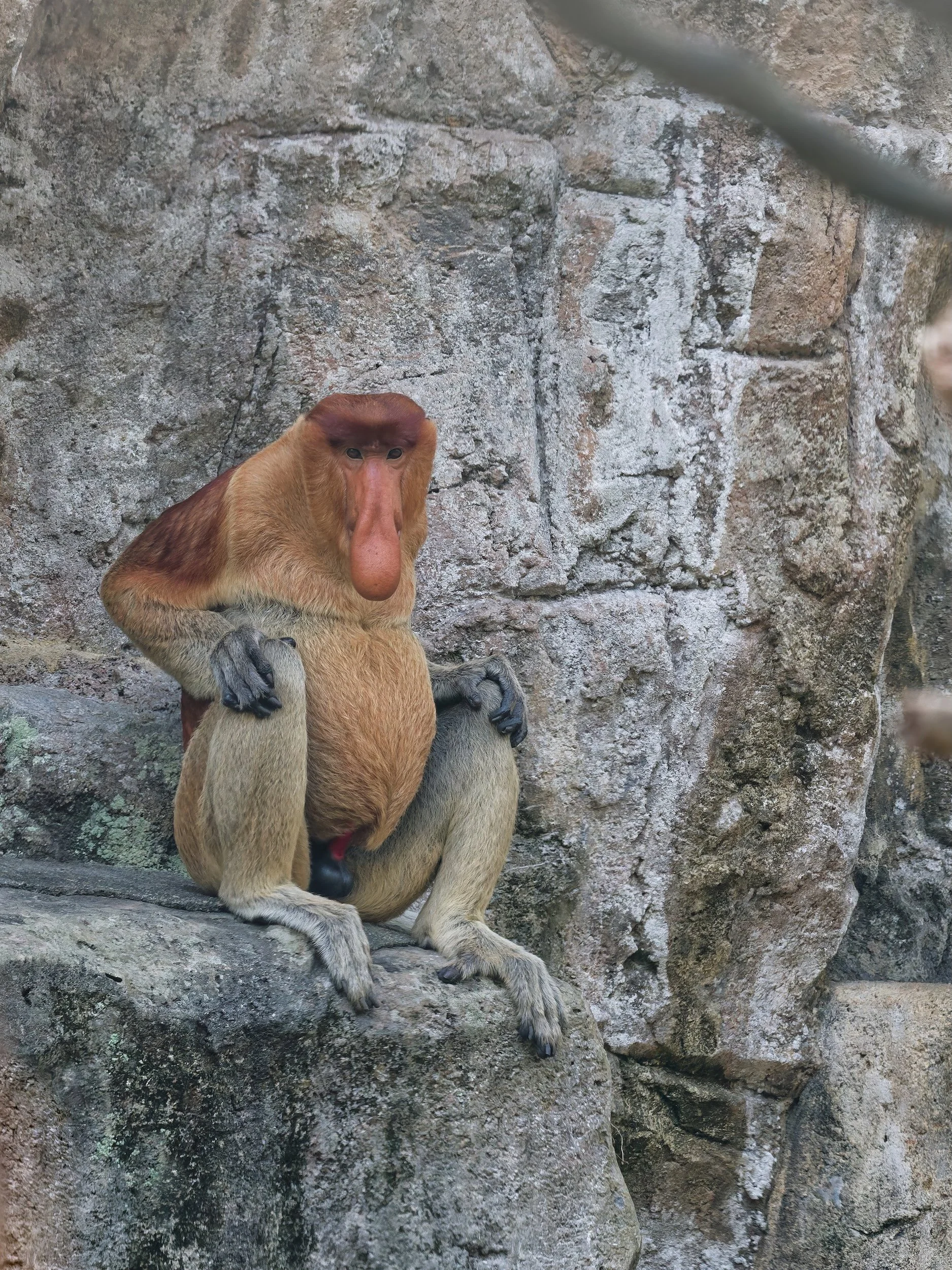
Perhaps there will still be a chance to visit one of the rehabilitation centers in Kalimantan, then I will have seen all the habitats of this marvelous creature that resembles us humans so much—and observing them is such a privilege, as they share 97% of our DNA. It’s truly a pleasure to be able to observe these primates in their natural behavior—time well spent at the zoo. This left us short on time to visit the next primates—a plan that actually fell through because of our visit to the tigers, lions, and cheetahs. So no chimpanzees today. At the end of the day, near the exit—after a tiring, hot but satisfying visit—we stopped by the proboscis monkeys, who were busy hiding until they were fed fresh foliage. In the wild on Borneo and Kalimantan, these marvelous primates share roughly the same habitat as the orangutans. Which species did we see? Here is the list:
Orangutan
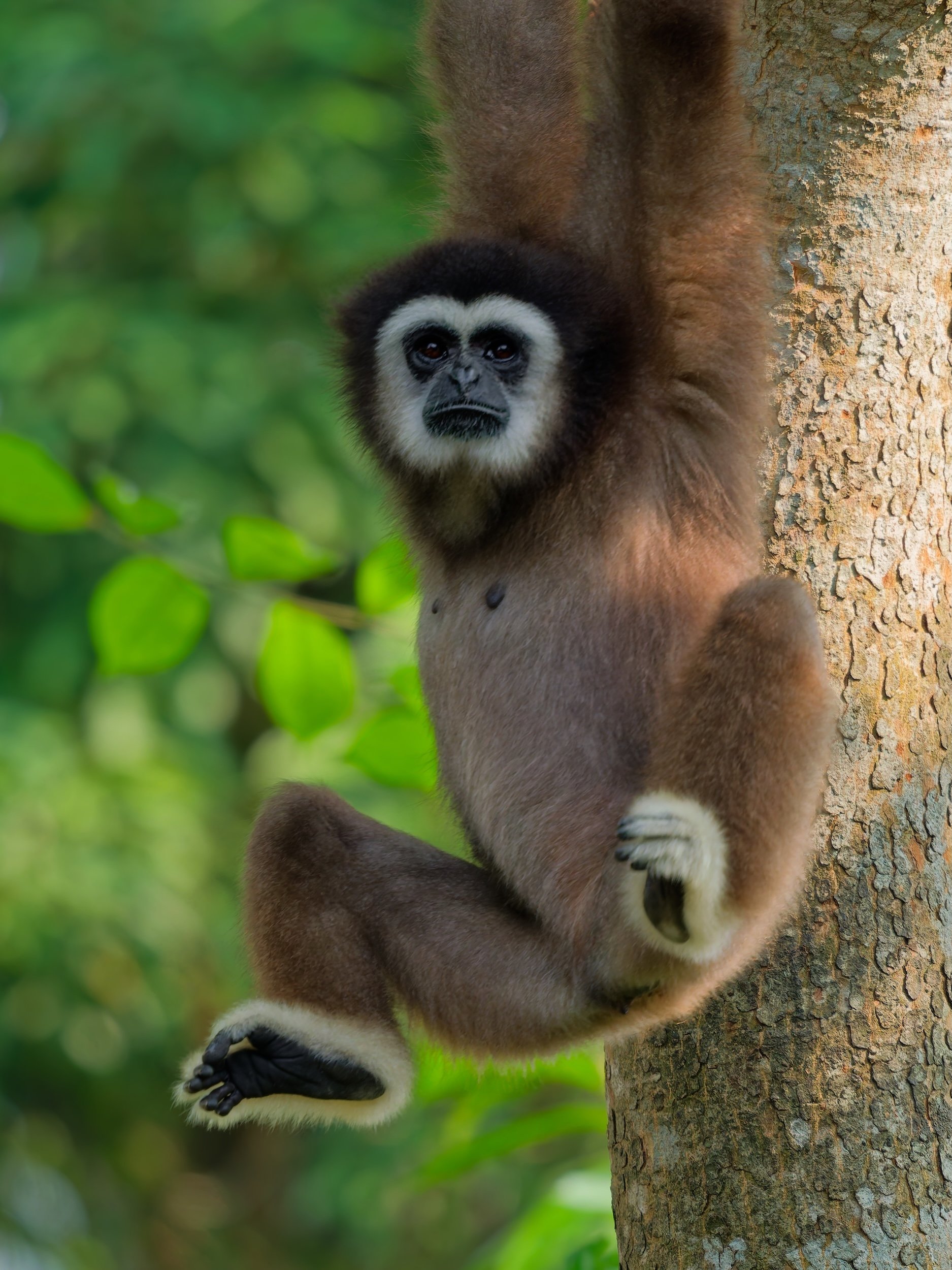
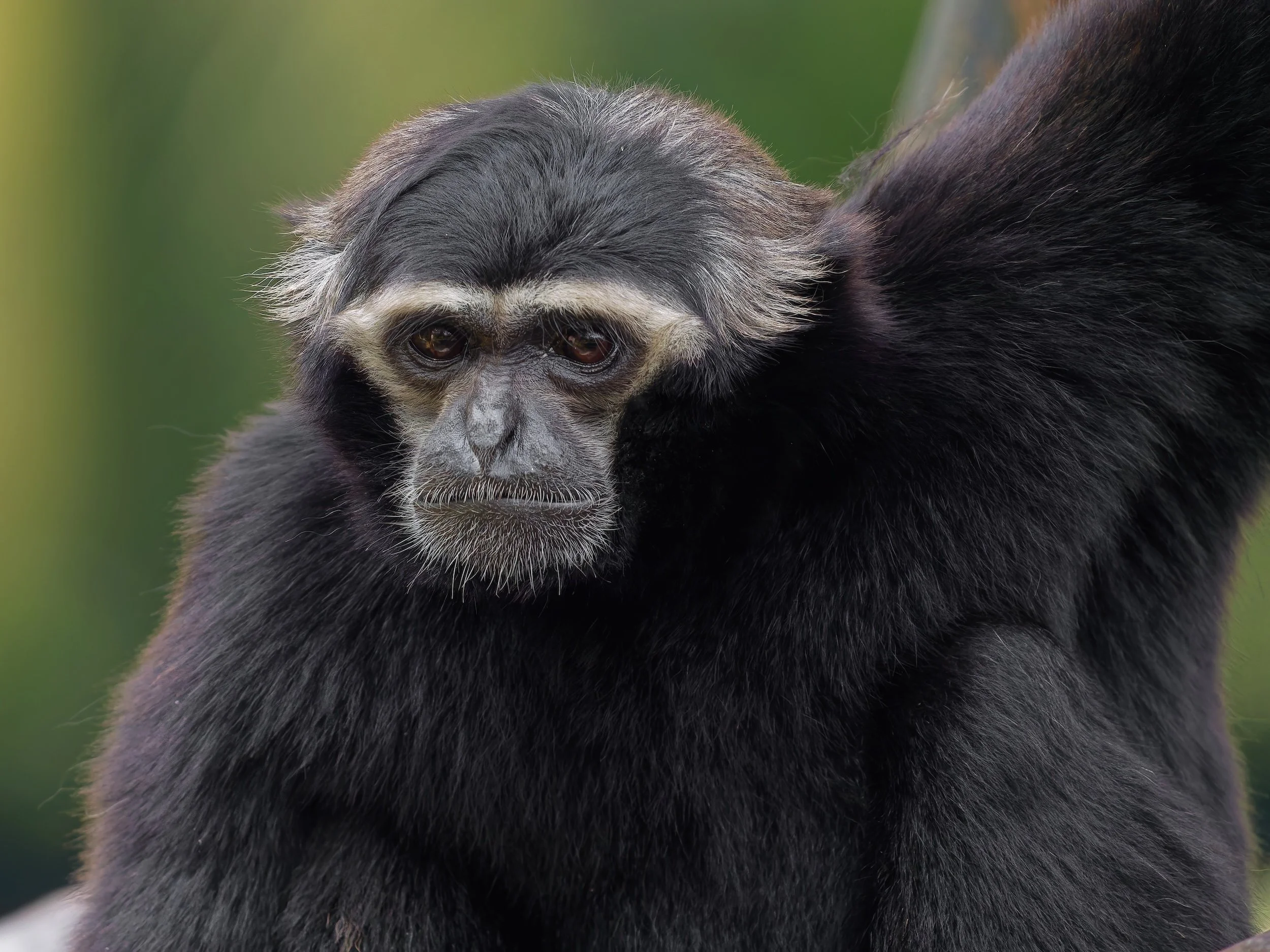
Lar gibbon
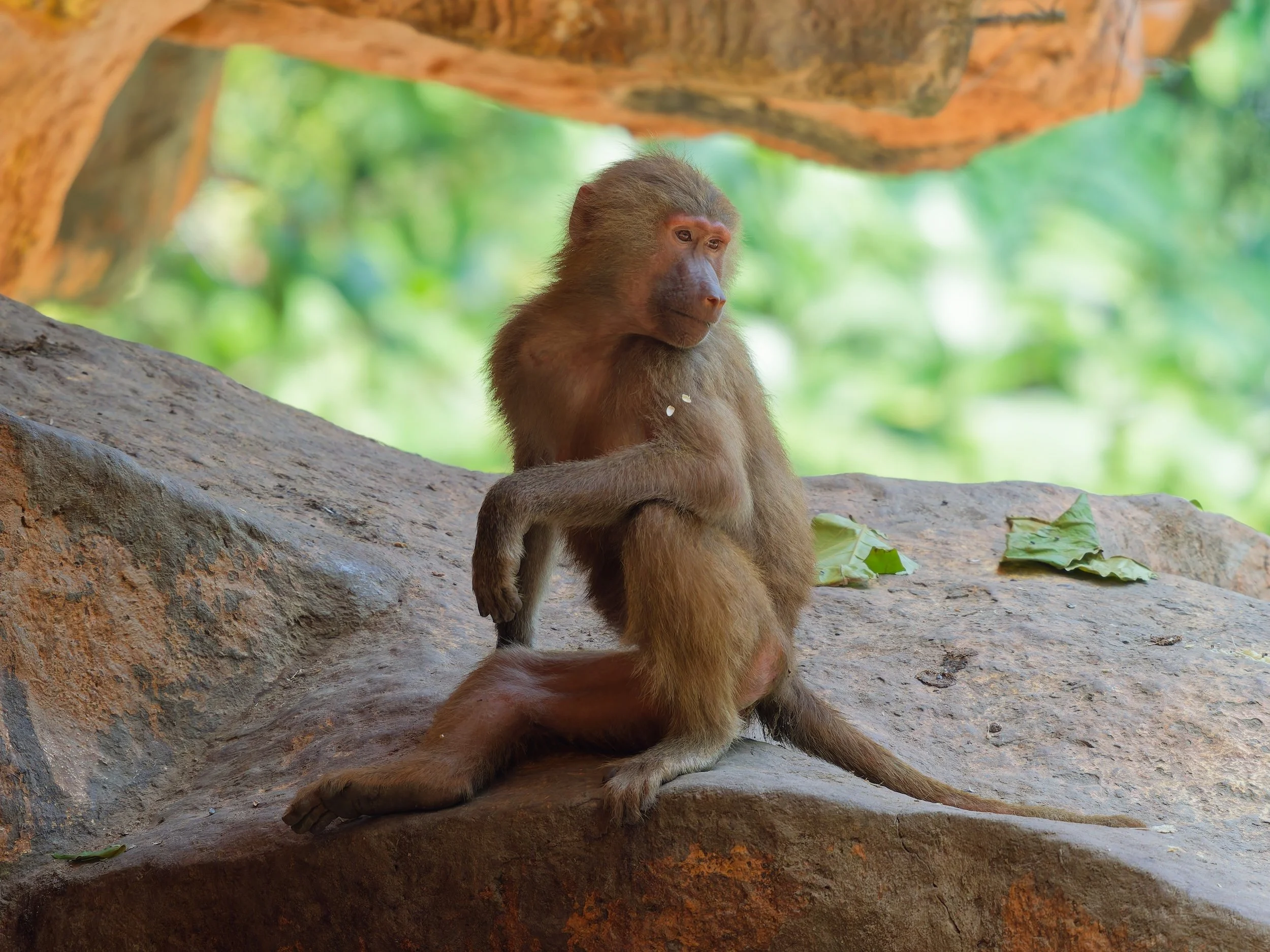
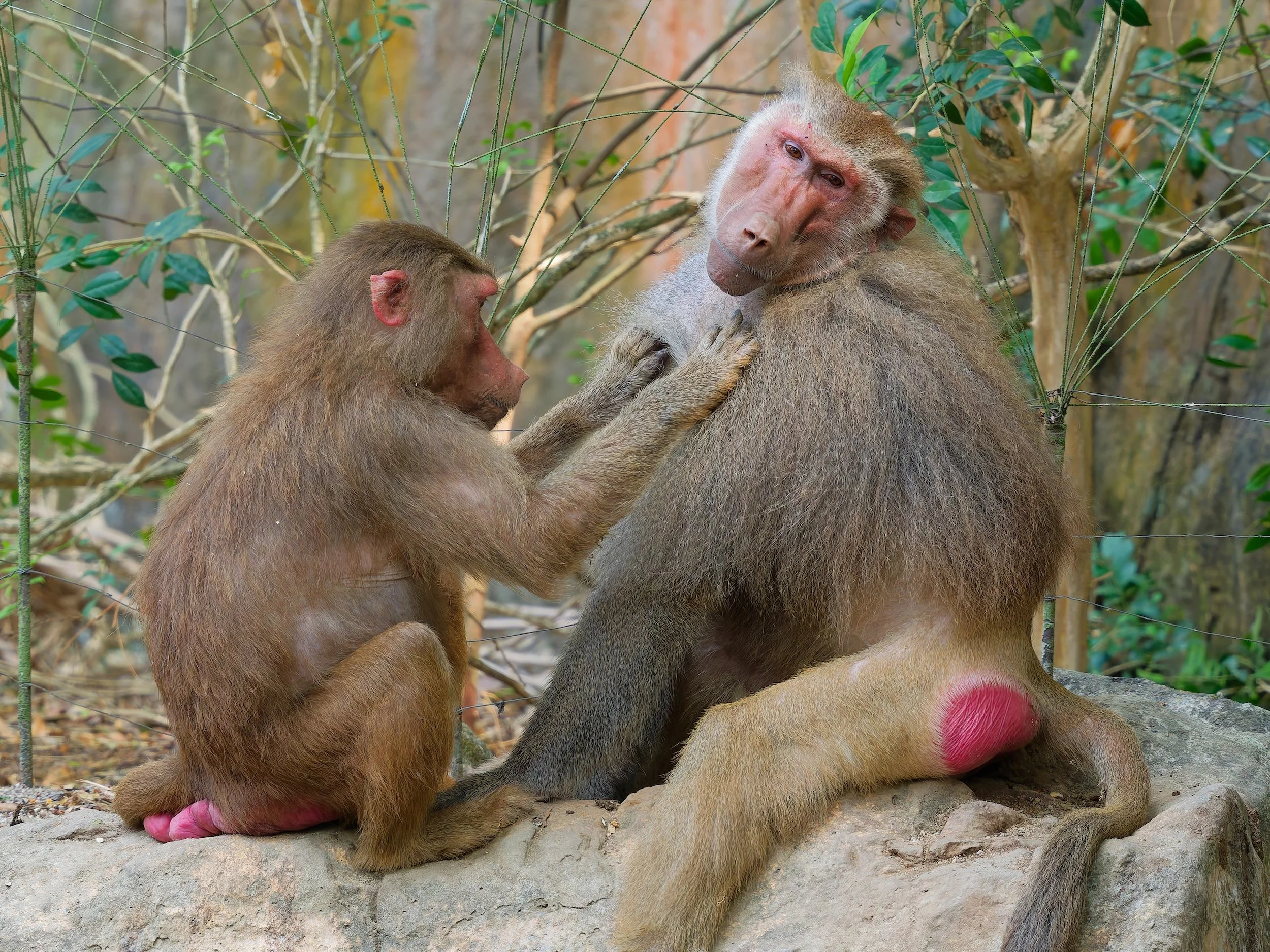
Hamadryas baboon
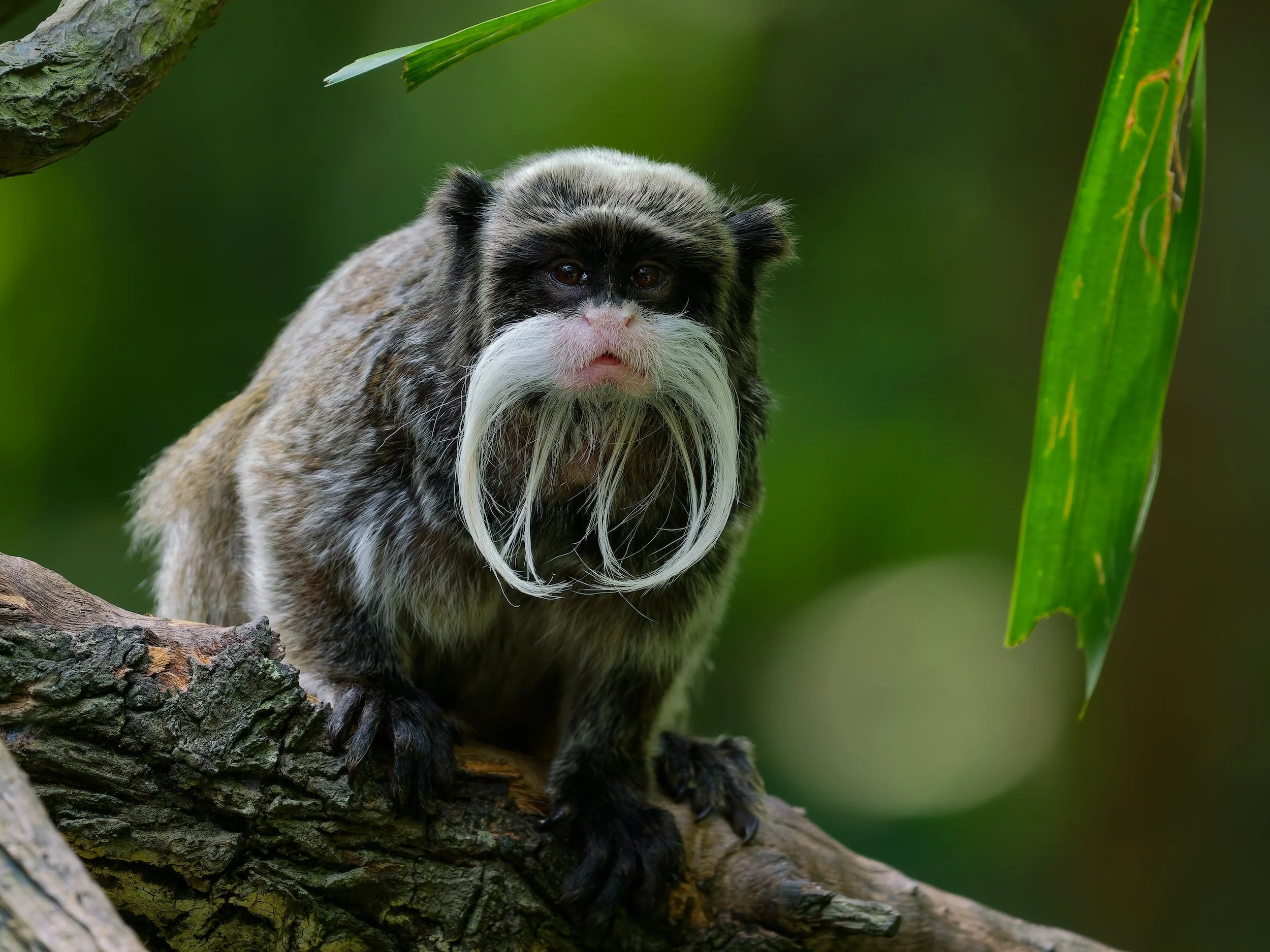
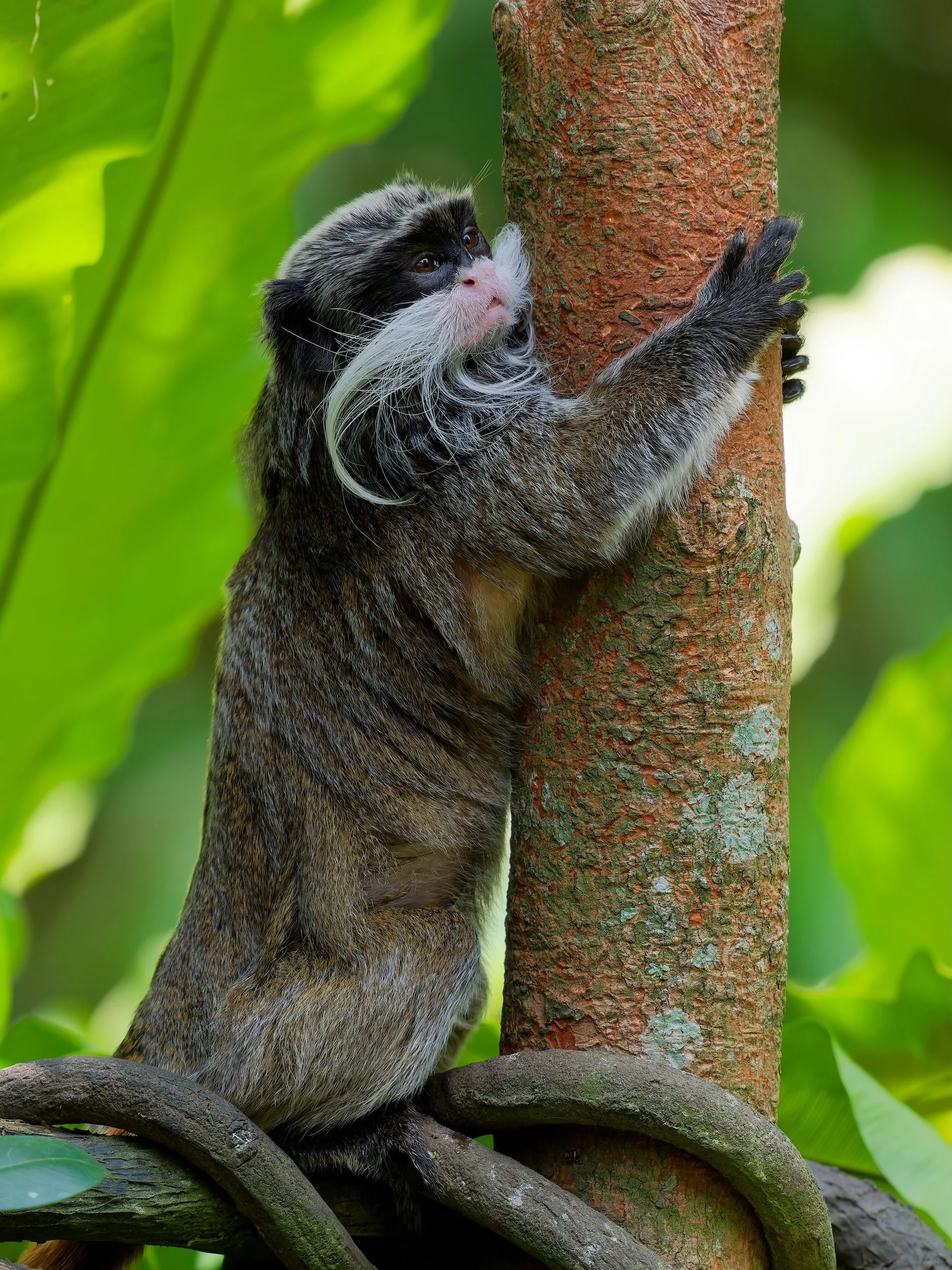
Emperor tamarin
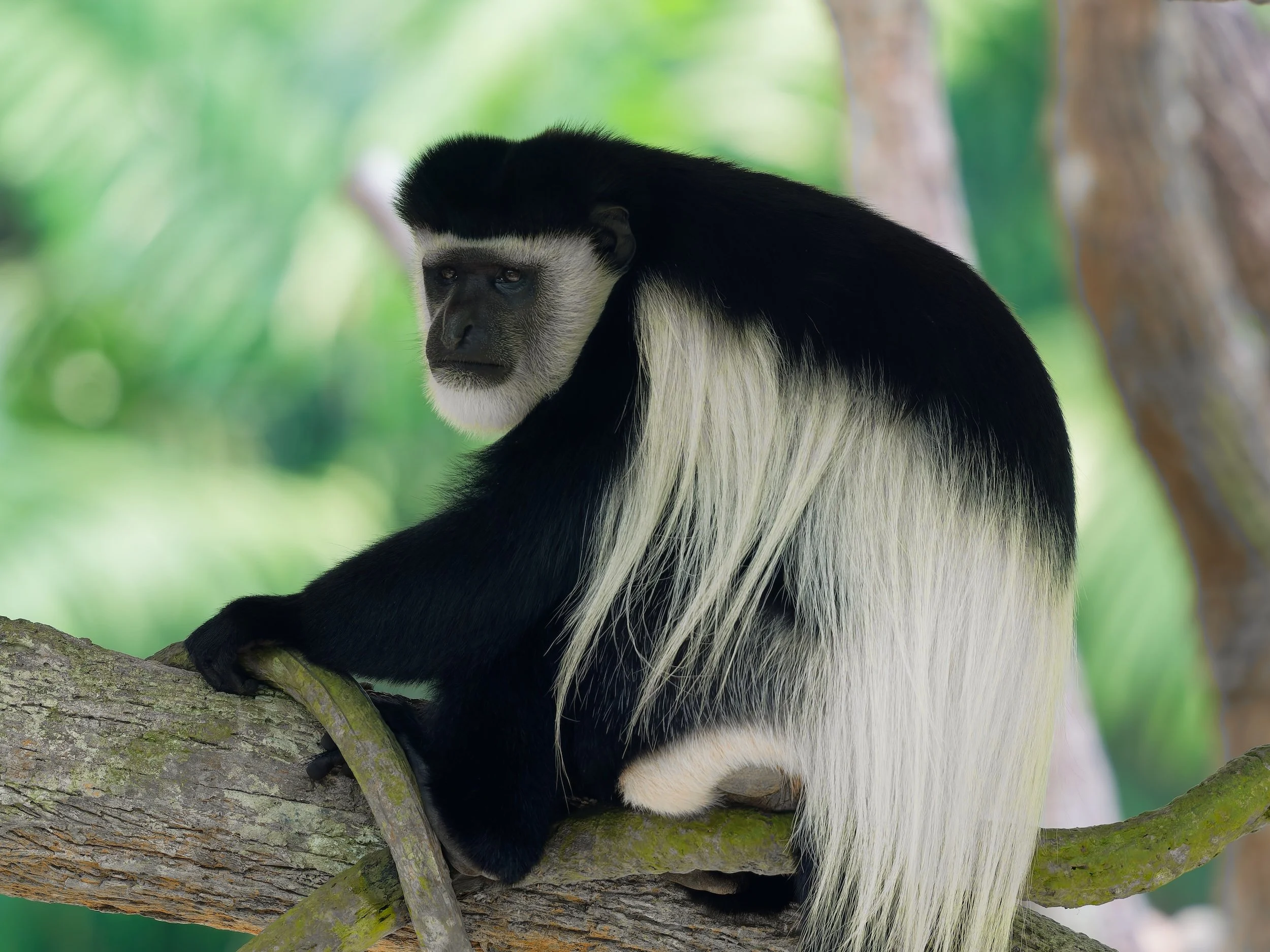
Black-and-white colobus monkey
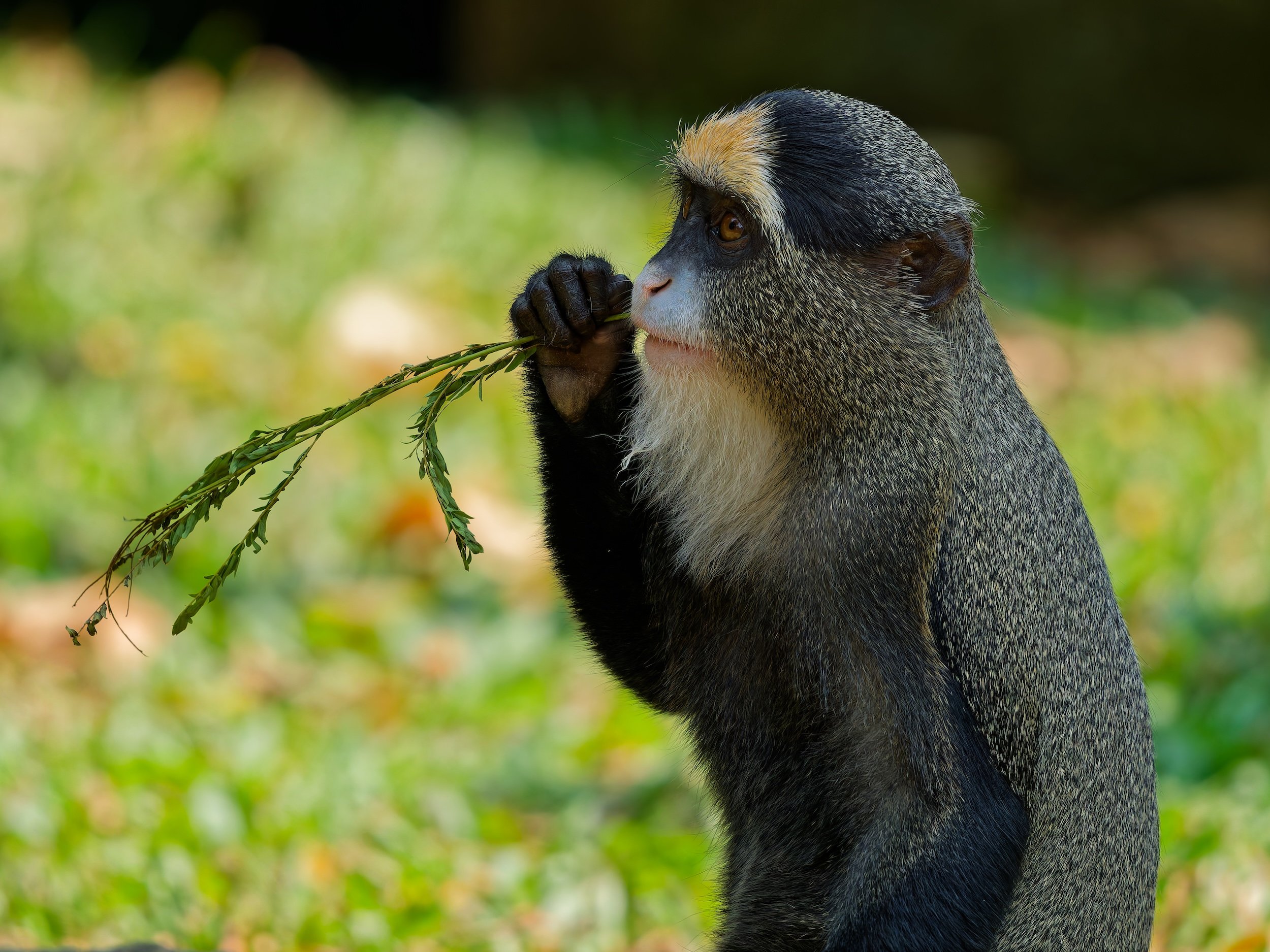
Brazza’s monkey
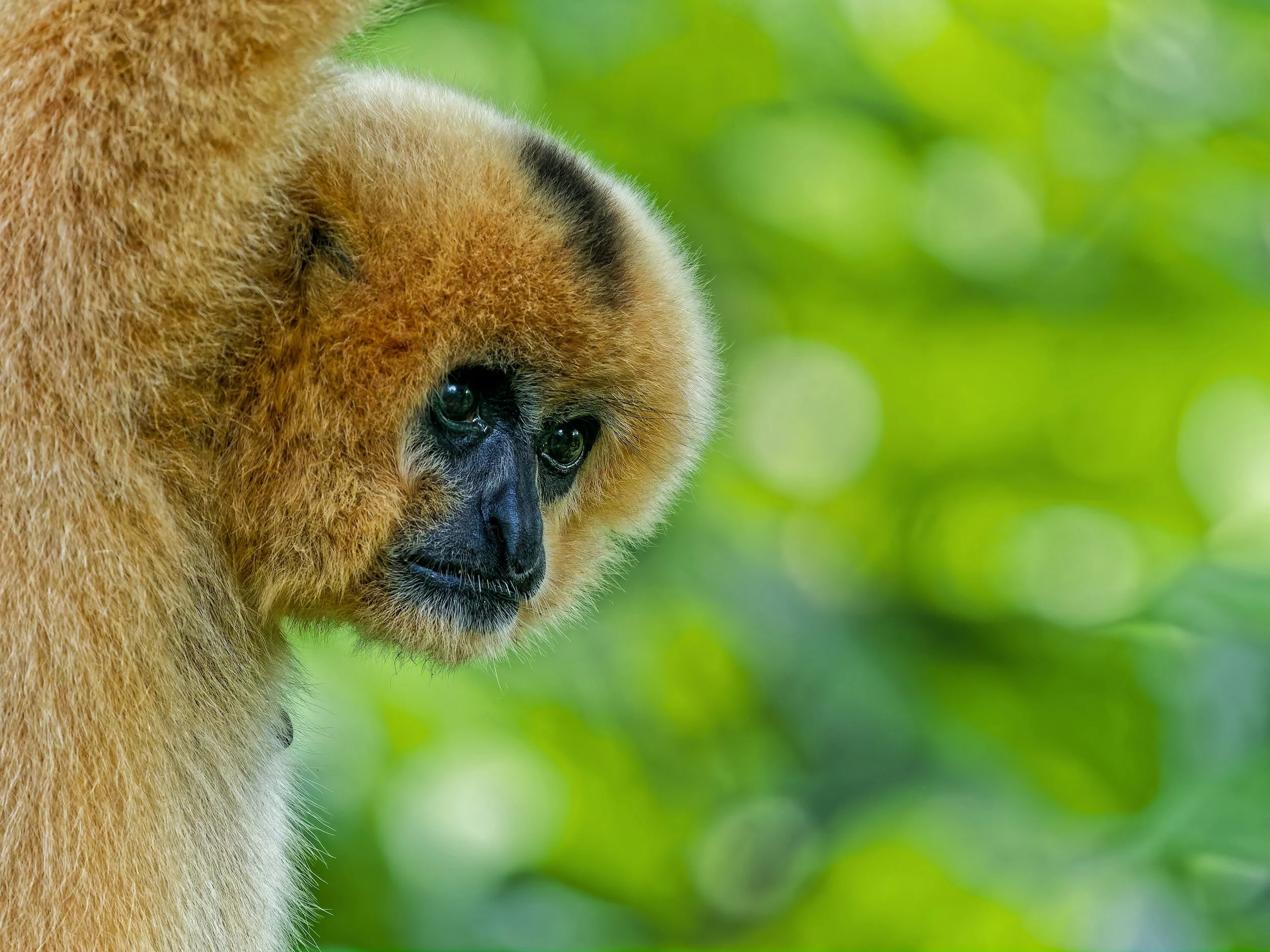
Pileated gibbons
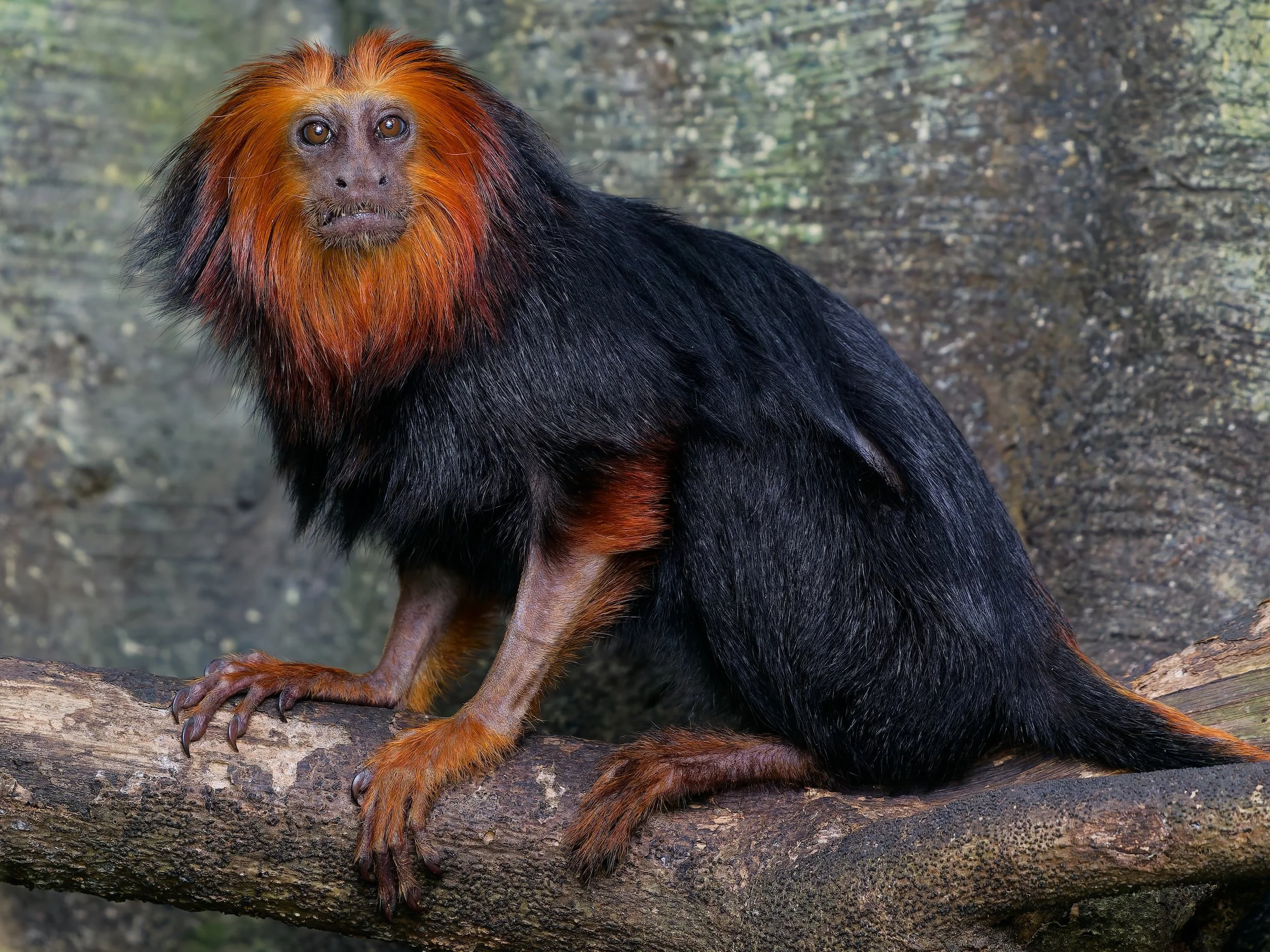
Golden-headed lion tamarin
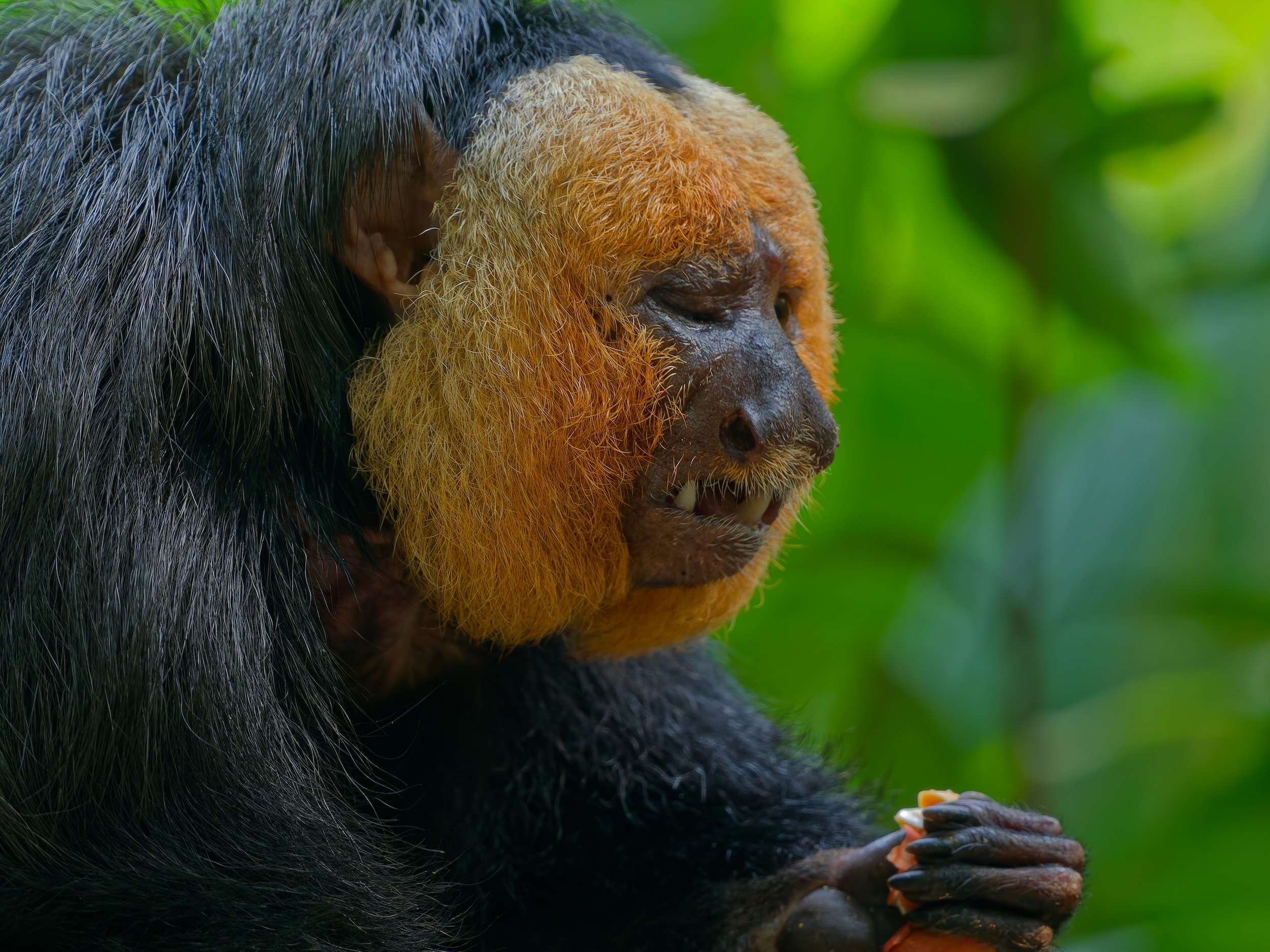
White-faced saki monkey
Proboscis monkey.
All photos were taken with
an OM Digital OM-1 Mark II and MZuiko 50-200mm f/2.8 and MZuiko 150-400mm f/4.5 lenses.
How to get to Singapore Zoo:
Take a taxi via Grab or take the MRT to Khatib MRT Station, then take the Mandai Khatib Shuttle bus to the Mandai Zoo stop 2.